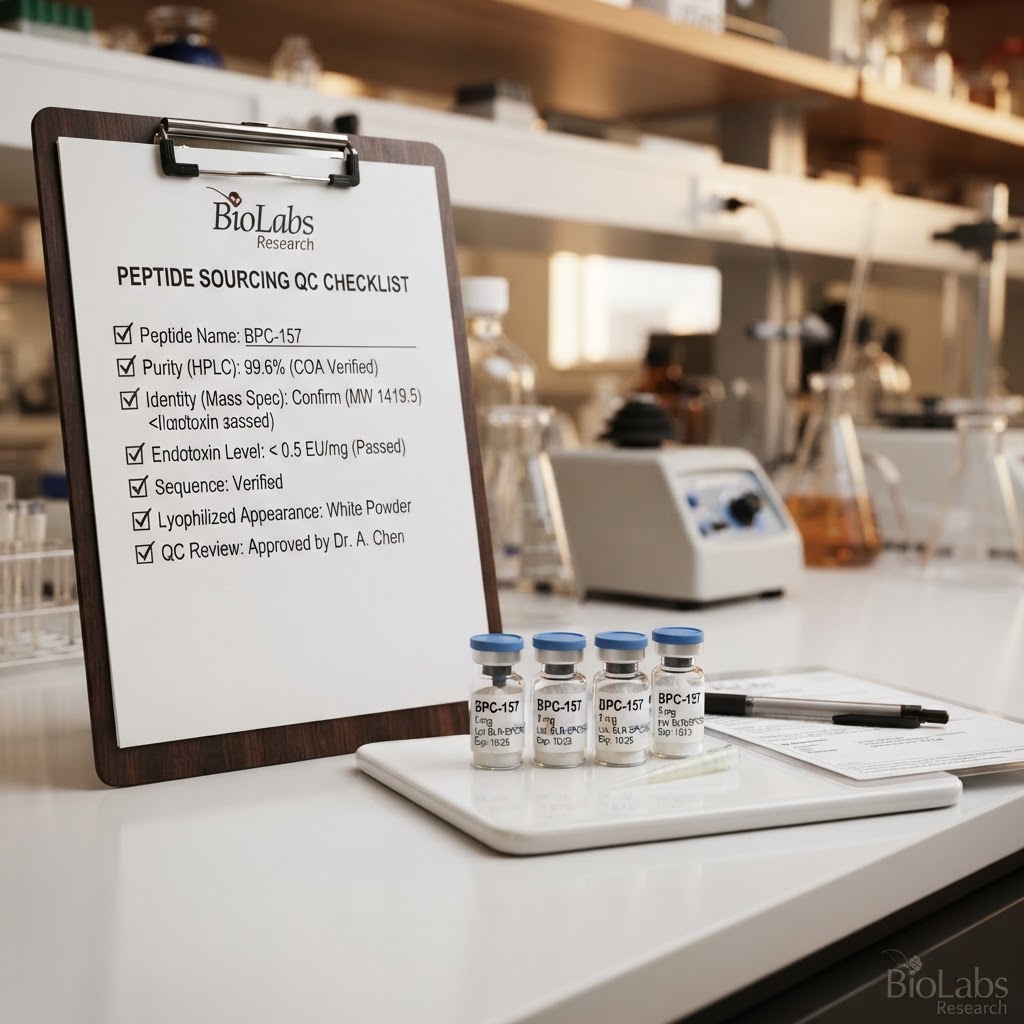
Sourcing checklist: COA availability, HPLC/MS data, lab address, and lot traceab
Sourcing research peptides online has become increasingly common for laboratories, universities, and independent researchers. However, the market is fragmented and quality varies dramatically between suppliers. This guide outlines what to look for when buying research peptides online in 2026 — from COA verification to payment security.
What Are Research Peptides?
Research peptides are short chains of amino acids (typically 2-50 residues) sold for in vitro and laboratory research. They are classified as Research Use Only (RUO) reagents — not pharmaceuticals, not supplements, and not intended for human consumption. Common research peptides include BPC-157, TB-500, NAD+, GHK-Cu, Epithalon, and others studied in cellular signaling, metabolic, and longevity research contexts.
Key Factors When Choosing a Peptide Supplier
1. Certificate of Analysis (COA) Availability
The single most important factor. A reputable supplier should provide lot-specific COAs with HPLC purity and mass spectrometry data. If a supplier cannot or will not provide a COA, that is a significant red flag. See our COA guide for what to look for.
2. Purity Standards
Research-grade peptides should be accompanied by HPLC purity data on the lot COA. A specific percentage without a lot, method, and wavelength is not a meaningful claim.
3. Transparent Pricing
Pricing should be clearly listed and in a major currency (USD, EUR, GBP). Avoid suppliers with opaque pricing or who require you to "contact for a quote" on standard catalog items.
4. RUO Compliance
A legitimate research peptide supplier will prominently display RUO (Research Use Only) labeling and will not make therapeutic, clinical, or lifestyle claims about their products. This is both a regulatory and ethical standard.
5. Company Transparency
The supplier's company name, registered address, and contact information should be clearly visible on the website. Anonymous suppliers with no verifiable business entity are a risk.
6. Secure Inquiry Process
For RUO reagents, many suppliers use an inquiry-based checkout rather than direct payment processing. This is standard for research chemicals. Ensure the inquiry form is secure and that the supplier responds promptly.
Red Flags When Sourcing Peptides Online
- Therapeutic claims — any supplier claiming their peptides "treat," "cure," or "heal" is violating RUO standards and likely cutting corners elsewhere
- No COA available — if the supplier cannot provide lot documentation, you cannot verify what you are buying
- Crypto-only payments — while some legitimate suppliers accept crypto, a supplier that accepts only cryptocurrency with no other payment method is a red flag
- No company information — no registered business name, no address, no contact details
- Unrealistically low prices — significantly below market rate may indicate mislabeled or impure product
- No RUO labeling — selling peptides without RUO designation suggests the supplier is marketing to consumers, not researchers
How to Evaluate a Peptide Supplier: Checklist
- ☐ COA available on request or on website
- ☐ HPLC purity reported on lot COA
- ☐ Mass spectrometry data on COA
- ☐ Company name and address visible
- ☐ RUO labeling prominently displayed
- ☐ No therapeutic or lifestyle claims
- ☐ Clear pricing in a major currency
- ☐ Lot numbers on product labels
- ☐ Responsive customer service (test with a question)
- ☐ Secure checkout or inquiry process
Popular Research Peptides in 2026
Based on current research literature, the following peptides are commonly sourced for laboratory study:
- BPC-157 — gastric-derived pentadecapeptide studied in tissue repair models
- TB-500 — Thymosin Beta-4 fragment studied in cellular signaling
- NAD+ — nicotinamide adenine dinucleotide for biochemical reference studies
- GHK-Cu — copper peptide studied in dermatological and wound research
- R3TA — triple receptor agonist studied in metabolic research
- Epithalon — tetrapeptide studied in aging research models
Trust, but verify. — Russian proverb
Browse Our Research Peptide Catalog
16 compounds. Third-party tested. Lot COAs on request. RUO only.
View Full Catalog →Shipping and Handling Considerations
Research peptides are typically shipped as lyophilized powder, which is stable at room temperature for short periods. For long-term storage, -20°C is recommended. When ordering, consider:
- Shipping time — peptides should arrive within a reasonable timeframe
- Packaging — sealed vials with desiccant are standard
- Tracking — always use tracked shipping for research reagents
- Customs — international orders may face customs inspection; ensure RUO labeling is clear
See our shipping policy for details.