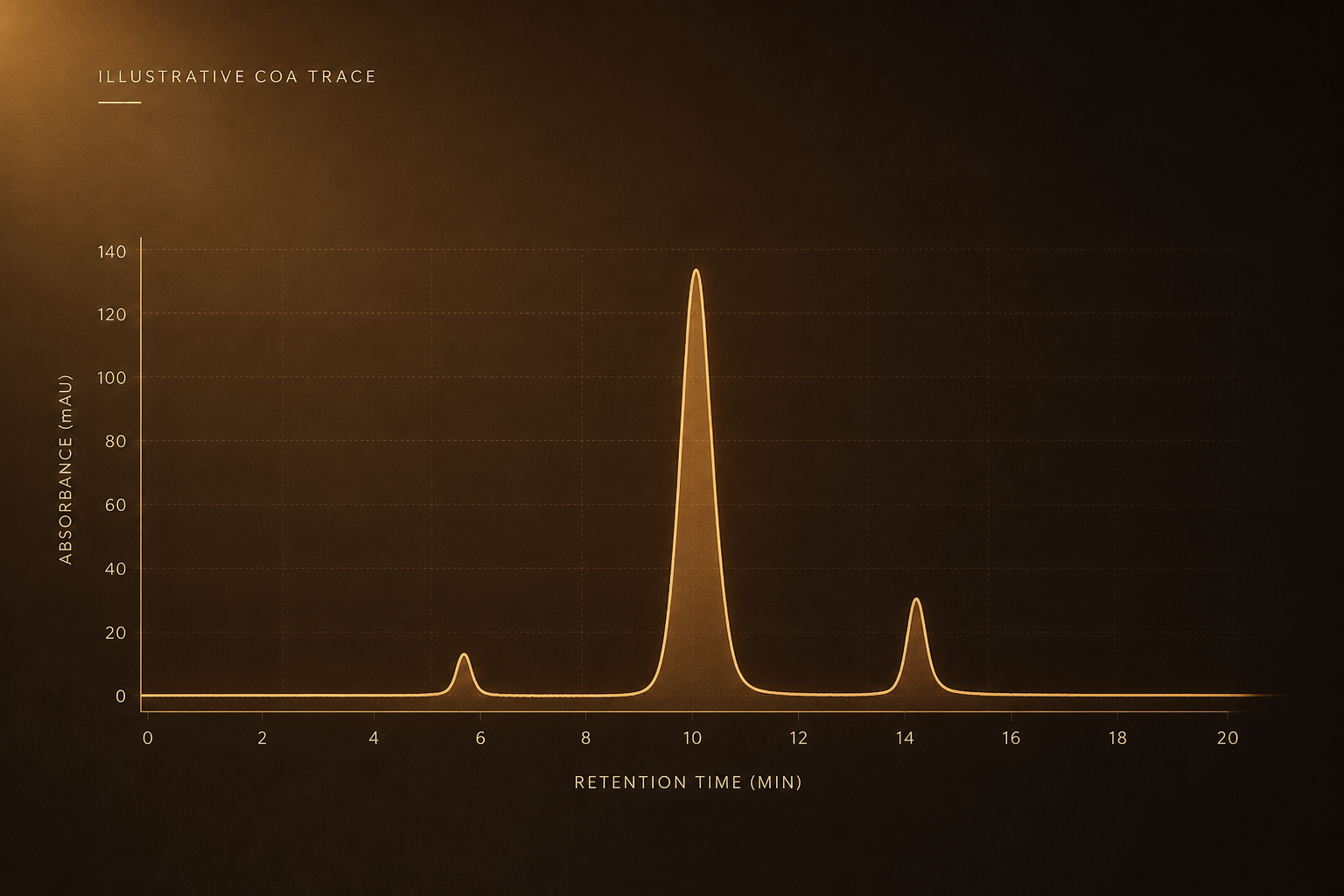
Lot COA traceability — purity is not a single percentage
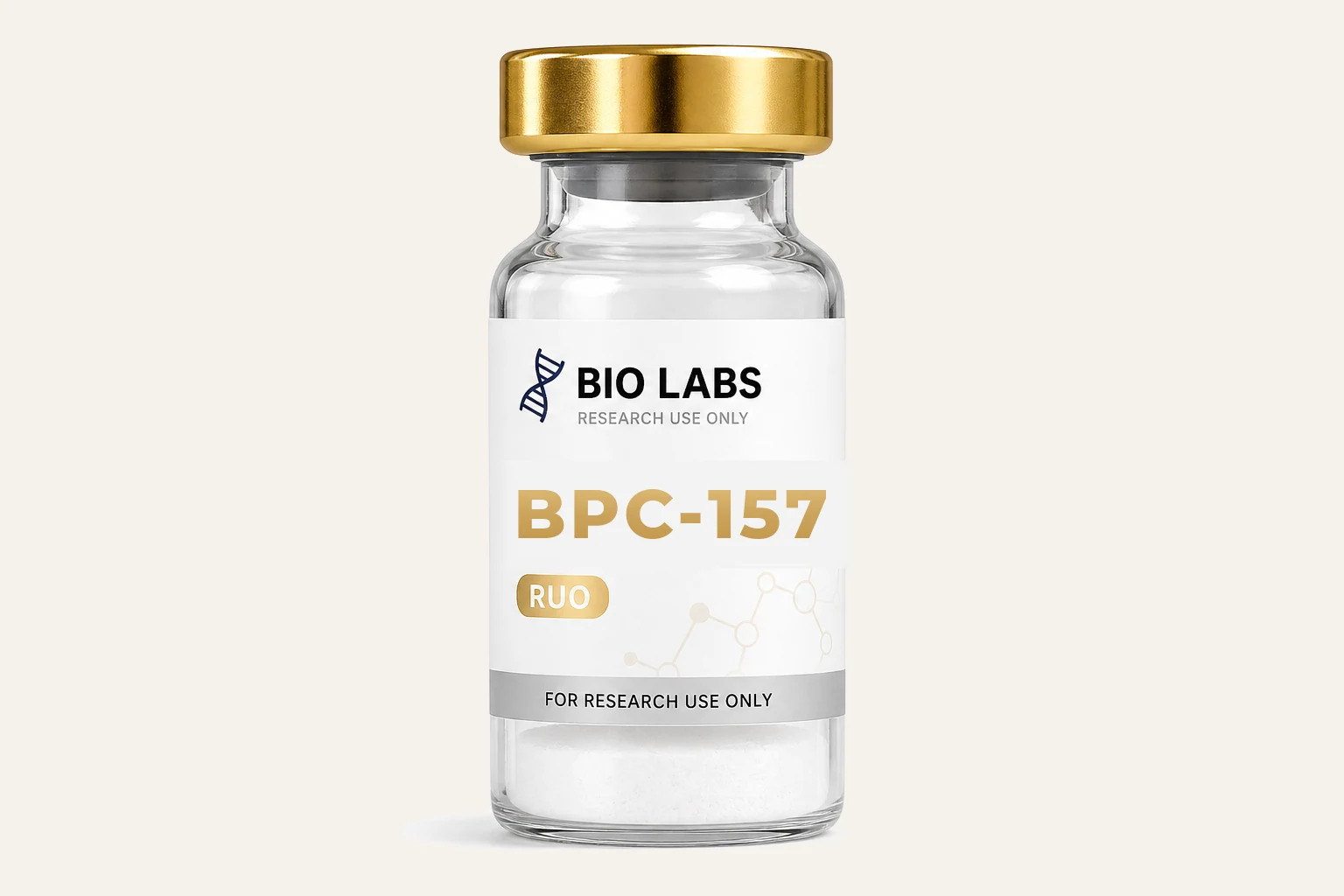
Catalog vial — lot COA identity note
A Certificate of Analysis (COA) is lot paper, not a marketing badge. It is tied to a batch identifier. The useful fields are identity (what molecule was measured) and purity-related measurements (how that measurement was run). A storefront number that is not on that certificate is not lot data.
Identity on a peptide COA usually means sequence or structure as named, a CAS or equivalent registry when applicable, theoretical mass, and an observed mass (often from MS). If the sequence line and the observed mass disagree, stop. Do not “average” them into a purity percentage. Confirm the SKU against the paper before the experiment starts.
Purity fields are method-dependent. HPLC area percent is a UV chromatogram ratio under one method ID — not milligrams of peptide in the vial, and not net peptide content (NPC). Residual solvents, counter-ion (e.g. TFA), and water can all change how much peptide you actually weigh. Those distinctions belong on the COA when the lab reports them; they are not something a blog invents.
When we say “COA on request,” we mean the lot document for that shipment — not a house purity claim reused across SKUs. If a field is blank, ask for it. If a percentage appears only on a product card and not on the certificate, treat it as missing. Related reading: HPLC area percent vs net peptide content and Peptide purity and COA explained.
Contact for lot paper questions: admin@biolabsresearch.co. Catalog listings remain research-use-only reagents. Match CAS, sequence, and mass on the COA to the vial label before you open the lot.