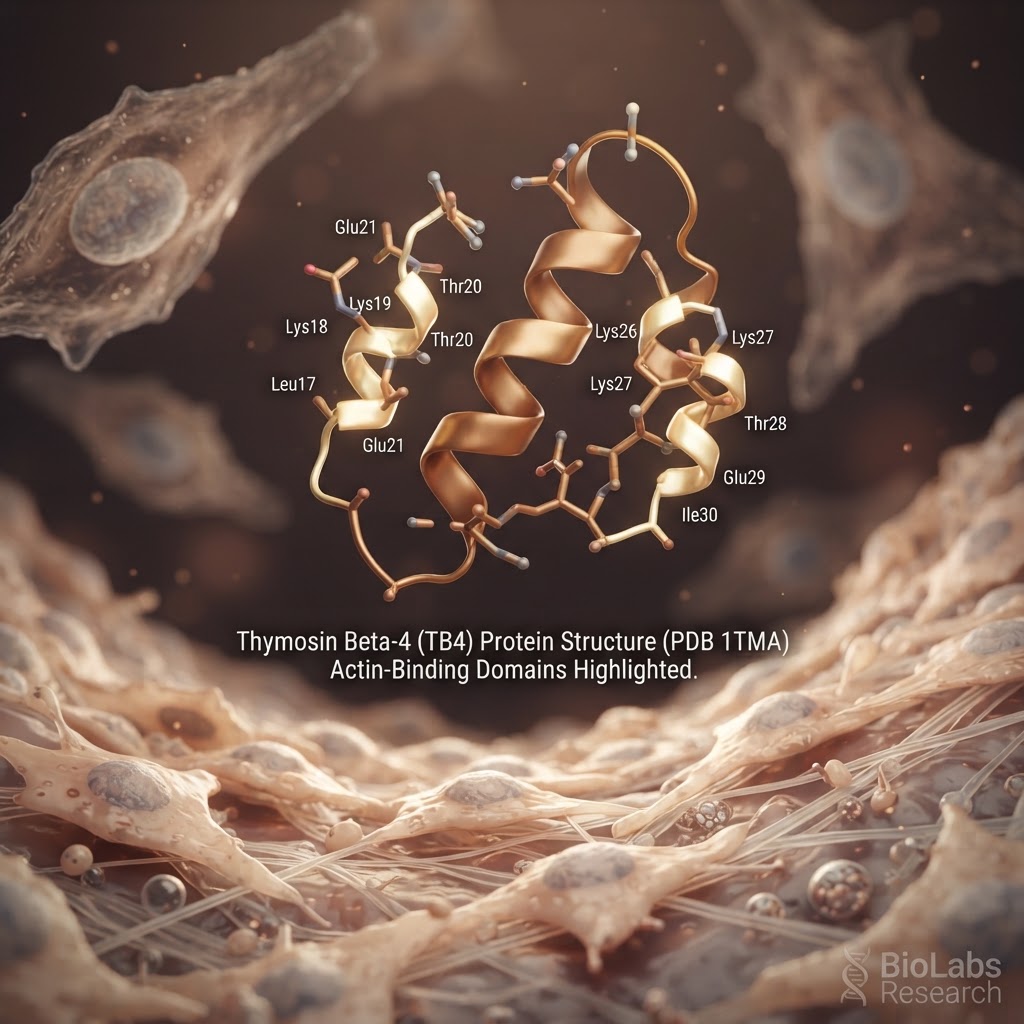
Thymosin Beta-4 structure: the actin-binding domains that enable its role in cel
TB-500 is a synthetic fragment of Thymosin Beta-4 (Tβ4), a 43-amino acid peptide naturally found in many tissues. TB-500 has been studied extensively in tissue repair and cellular signaling research. This article provides a research-only overview — no therapeutic claims are made.
Chemical Identity
TB-500 is a short synthetic peptide fragment corresponding to the active region of Thymosin Beta-4 (residues 17-23, LKKTETQ). Full-length Thymosin Beta-4 has a molecular weight of approximately 4,963 Da. The TB-500 fragment is supplied as a lyophilized powder for laboratory reconstitution.
What Is Thymosin Beta-4?
Thymosin Beta-4 is a naturally occurring actin-sequestering peptide found in nearly all human cells. It plays a role in:
- Actin regulation — binds G-actin and regulates filament assembly
- Cell migration — promotes keratinocyte and endothelial cell migration in wound models
- Anti-inflammatory signaling — modulates inflammatory cytokine production in vitro
- Tissue repair — studied in cardiac, dermal, and corneal injury models
Research Applications
Tissue Repair and Regeneration
TB-500/Tβ4 has been studied in multiple tissue repair models:
- Cardiac tissue repair following injury in animal models
- Corneal epithelial wound healing in ophthalmic research
- Dermal wound healing and fibroblast migration studies
- Tendon and ligament cellular signaling research
Anti-Inflammatory Research
Tβ4 has demonstrated anti-inflammatory properties in preclinical studies, modulating NF-κB signaling and reducing pro-inflammatory cytokine expression in cell culture models.
Neuroprotection Research
Emerging research has examined Tβ4's potential neuroprotective properties in neuronal cell culture models, particularly in the context of oxidative stress and neuroinflammation.
TB-500 vs. BPC-157: Research Comparison
Both TB-500 and BPC-157 are studied in tissue repair contexts, but through different proposed mechanisms:
- Source: TB-500 is thymus-derived (Tβ4 fragment); BPC-157 is gastric-derived
- Mechanism: TB-500 primarily via actin sequestration; BPC-157 via VEGF and angiogenic signaling
- Size: TB-500 fragment is smaller; BPC-157 is a 15-amino acid peptide
Some researchers source both as a blend for comparative studies. See our BPC-157 / TB-500 Blend or individual TB-500 and BPC-157 listings.
Sourcing TB-500 for Research
- Purity — see lot COA (HPLC/MS); no catalog-wide %
- Identity — mass spectrometry confirmation on COA
- Storage — store at -20°C as lyophilized powder
- Lot traceability — request COA with lot number before purchase
The only bad workout is the one that didn't happen.
Source TB-500 for Your Research
Third-party tested. Lot COA on request. RUO only.
View TB-500 Catalog Listing →