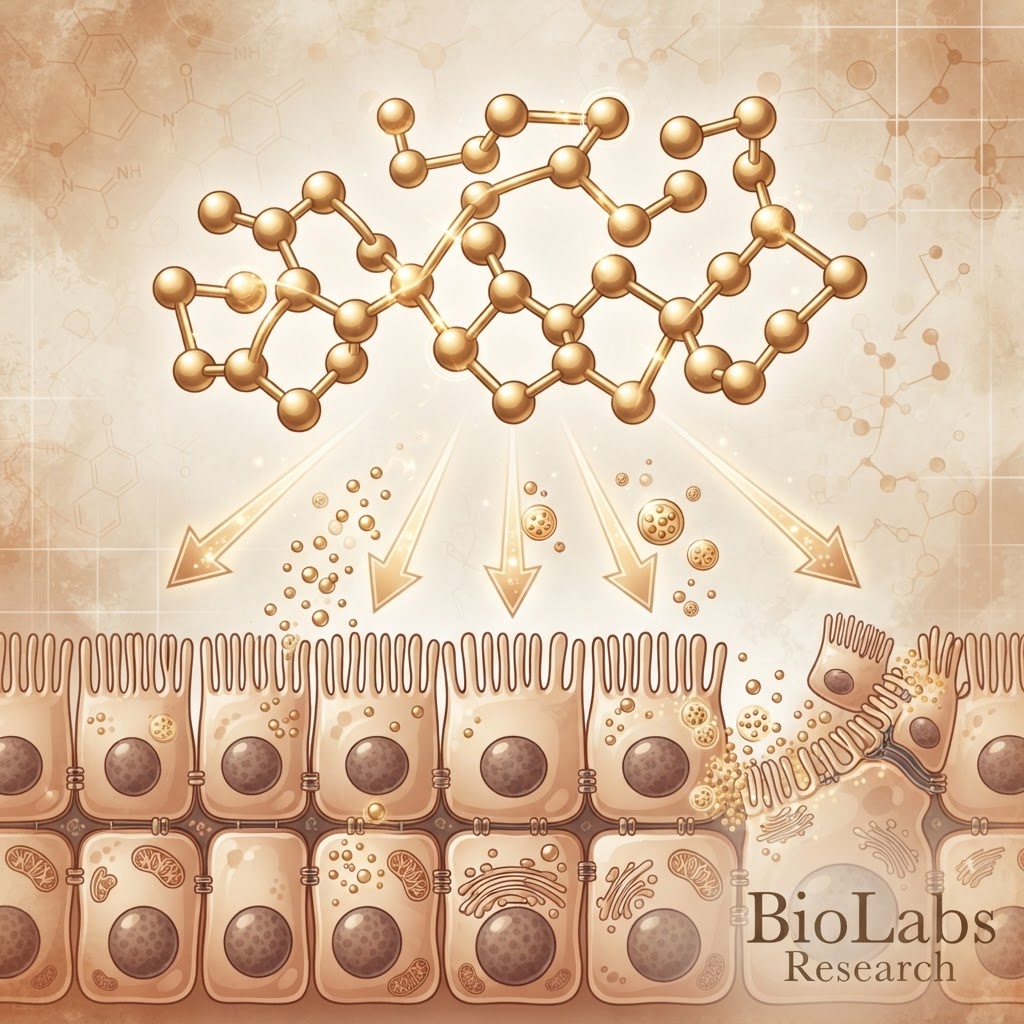
BPC-157's 15-amino acid chain: a gastric-derived pentadecapeptide with demonstra
BPC-157 (Body Protection Compound-157) is a synthetic pentadecapeptide derived from a sequence found in human gastric juice. Composed of 15 amino acids, it has attracted significant research interest for its potential role in cellular signaling pathways related to tissue repair and regeneration in laboratory models. This article provides a research-only overview — no therapeutic claims are made or implied.
Chemical Identity
BPC-157 has the amino acid sequence H-Gly-Glu-Pro-Pro-Pro-Gly-Lys-Pro-Ala-Asp-Asp-Ala-Gly-Leu-Val-OH. It is a fragment of the larger BPC protein identified in gastric juice research. The peptide has a molecular weight of approximately 1,419.5 Da and is typically supplied as a lyophilized (freeze-dried) powder for reconstitution in laboratory settings.
Research Applications
In published preclinical research, BPC-157 has been studied in several contexts:
- Tissue repair models: Studies have examined BPC-157 in tendon, ligament, and muscle tissue cultures to evaluate cellular proliferation and migration responses.
- Gastrointestinal research: As a gastric-derived peptide, BPC-157 has been investigated for its effects on intestinal epithelial cell behavior in vitro.
- Angiogenesis studies: Research has explored BPC-157's influence on vascular endothelial growth factor (VEGF) signaling pathways in controlled laboratory settings.
- Anti-inflammatory signaling: Several in vitro studies have examined BPC-157's interaction with inflammatory cytokine pathways.
Evaluating BPC-157 Lot Quality
When sourcing BPC-157 for laboratory research, lot documentation is the primary indicator of reagent quality. A Certificate of Analysis (COA) should include:
- HPLC purity analysis — confirming peptide purity percentage at a specified wavelength
- Mass spectrometry (MS) data — confirming molecular weight and identity
- Lot number and manufacture date — for traceability
- Laboratory name and testing method — the testing facility should be identified
Requesting a COA before purchase is standard practice in reagent sourcing. BioLabs Research provides lot COAs on request when available. See our guide to reading a COA for a detailed breakdown of what each section means.
Reconstitution and Storage for Laboratory Use
For laboratory handling of lyophilized BPC-157:
- Store lyophilized peptide at -20°C in sealed vials away from light
- Reconstitute with sterile bacteriostatic water for in vitro applications
- Use reconstituted solutions within 24-48 hours or store per protocol
- Avoid repeated freeze-thaw cycles that may degrade peptide integrity
BPC-157 vs. TB-500: Research Context
BPC-157 and TB-500 (a fragment of Thymosin Beta-4) are often studied together in cellular signaling research. While BPC-157 is a gastric-derived peptide, TB-500 is a thymus-derived peptide fragment. Both have been examined in tissue repair models, but through different proposed signaling pathways. Some researchers source both as a blend for comparative studies. See our BPC-157 / TB-500 Blend listing.
Sourcing BPC-157 for Research
When selecting a BPC-157 supplier for laboratory use, prioritize:
- Third-party testing — COAs from independent laboratories, not just in-house testing
- Lot traceability — each lot should have a unique identifier and test documentation
- Purity specifications — HPLC purity as reported on the lot COA
- Transparent pricing — research reagents should have clear, published pricing
Recovery is not a setback — it is preparation for the next breakthrough.
Source BPC-157 for Your Research
Third-party tested. Lot COA on request. Research use only.
View BPC-157 Catalog Listing →Frequently Asked Questions
Is BPC-157 FDA approved?
No. BPC-157 is not FDA approved for any therapeutic use. It is sold as a research-use-only laboratory reagent. BioLabs Research does not make any therapeutic or lifestyle claims.
What purity should I expect from research-grade BPC-157?
HPLC purity is reported on the lot-specific COA. Request the COA to verify the purity of your specific lot. Always request a COA to verify the purity of your specific lot.
Can I get a COA for my BPC-157 order?
Yes. BioLabs Research provides lot COAs on request when available. Contact us at inquiry form with your order details.