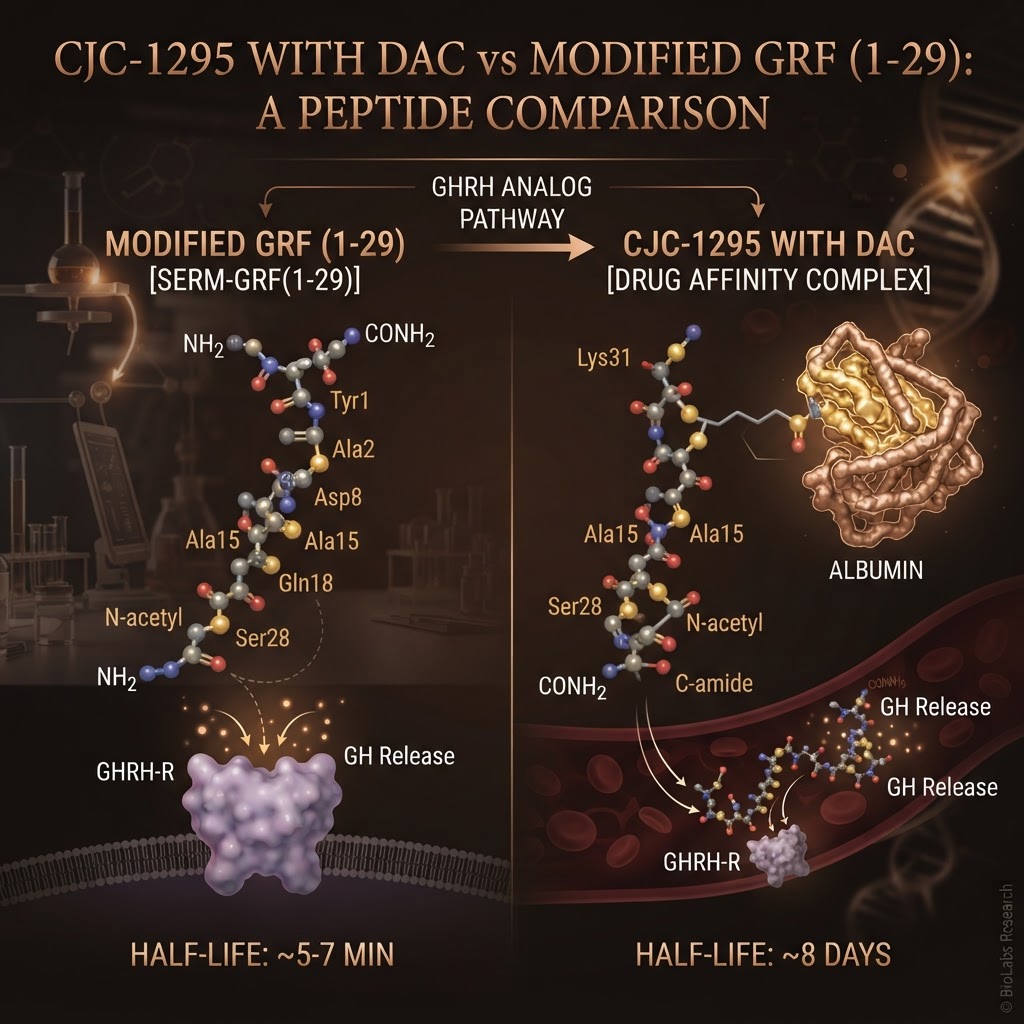
DAC vs no-DAC formula difference on the label
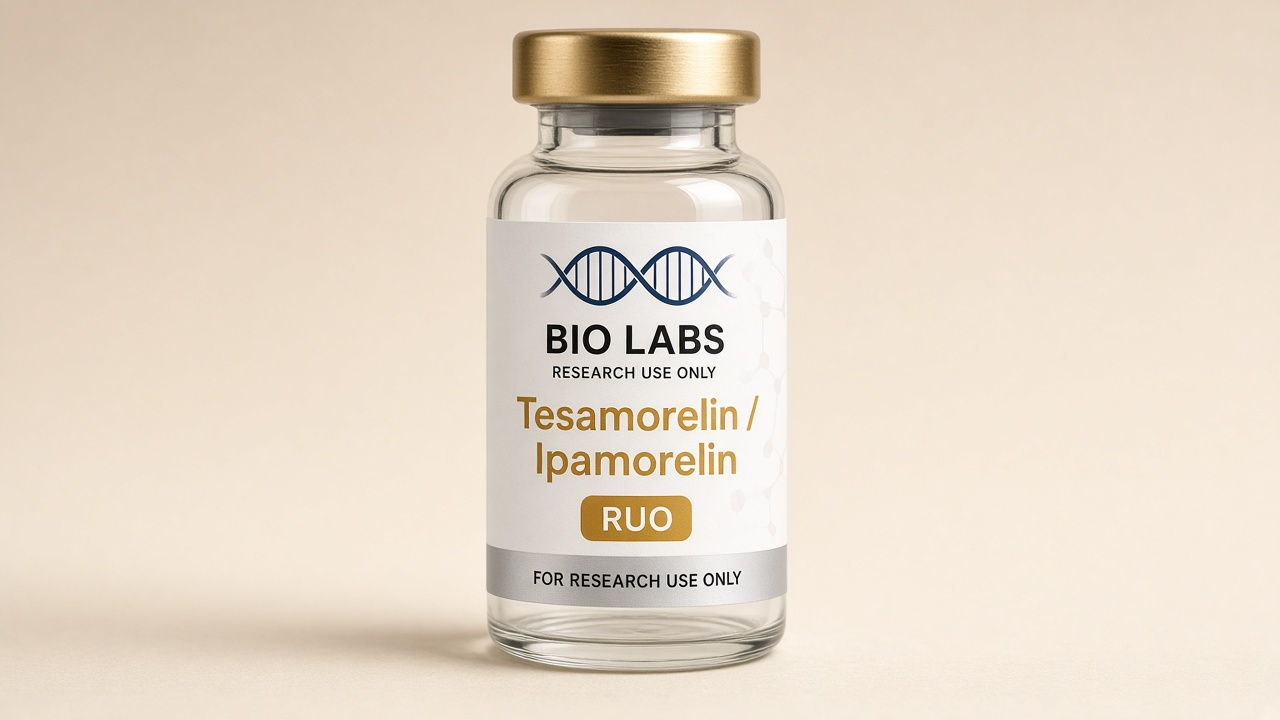
Tesamorelin / Ipamorelin catalog vial
“DAC” in peptide listings usually points to a Drug Affinity Complex-style chemical modification — commonly a maleimidopropionyl handle on a lysine — that changes formula and mass relative to the unmodified backbone. “No DAC” (or modified GRF 1-29 in the CJC-1295 naming cluster) is a different molecule. The storefront nickname is not the discriminator; the formula and observed mass are.
Public records treat CJC-1295 with DAC and without DAC as separate backbones (different formulae, different nominal masses). CAS numbers in circulation have been mis-paired with those nicknames. Believe the structure and MS result on the lot COA, not the marketing label. A longer walkthrough lives on our note: CJC-1295 with DAC and without DAC are different molecules.
This catalog does not list CJC-1295 (with or without DAC) as a SKU. The GHRH-class blend that is listed is tesamorelin / ipamorelin — two named components with their own CAS lines. Do not map a DAC nickname onto that blend.
When a PO or COA uses a nickname that can mean two formulae, require the certificate to print formula (or sequence plus modification) and observed mass. If the paper only says “CJC-1295” with no DAC flag and no mass, identity is unresolved. We will not fill that gap with a house purity number.
For purchasing questions on listed SKUs, write admin@biolabsresearch.co. Match the lot paper to the catalog card before the experiment — not the other way around.
What we actually list
Tesamorelin and ipamorelin as named components — not CJC-1295.
View that blend →